If you're looking for where to take the RVP Russian language exam, you've probably already realized that it's not the same test as for a patent or VNZh. And you'd be right: confusion between these exams is a common problem, and taking the wrong exam means wasting time and money. Let's break down what they have in common, how they differ, and how to figure out which one you need to prepare for.
What exams exist and what each one is for
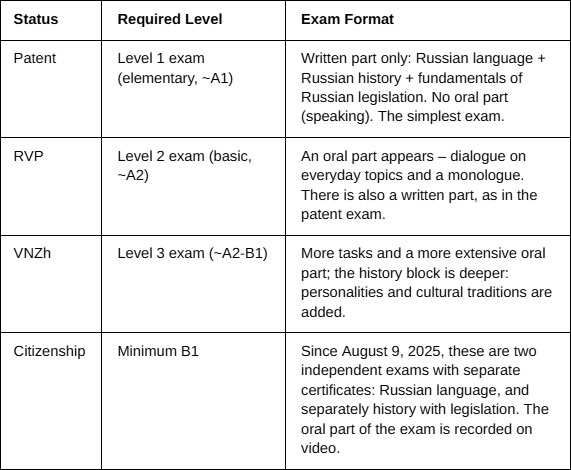
There are four migration statuses: patent, RVP for foreign citizens, VNZh, and citizenship. Each has its own exam in Russian, Russian history, and the fundamentals of Russian legislation.
Every exam includes: Russian + Russian history + Russian legislation questions
❗It's worth noting that without a valid certificate, documents for that status simply won't be accepted. The logic is simple: the longer and more serious the status, the deeper the language proficiency must be. Let's go through them in order: what a foreigner needs for a patent, and what changes later on the path to RVP, VNZh, or Russian citizenship.
Is it one exam or four different ones?
Patent, RVP, and VNZh are structurally identical exams that scale up by level: the same three-module core (Russian language, Russian history, and the fundamentals of Russian legislation), but each level adds more tasks, more complex texts, and, from RVP onward, an oral section.
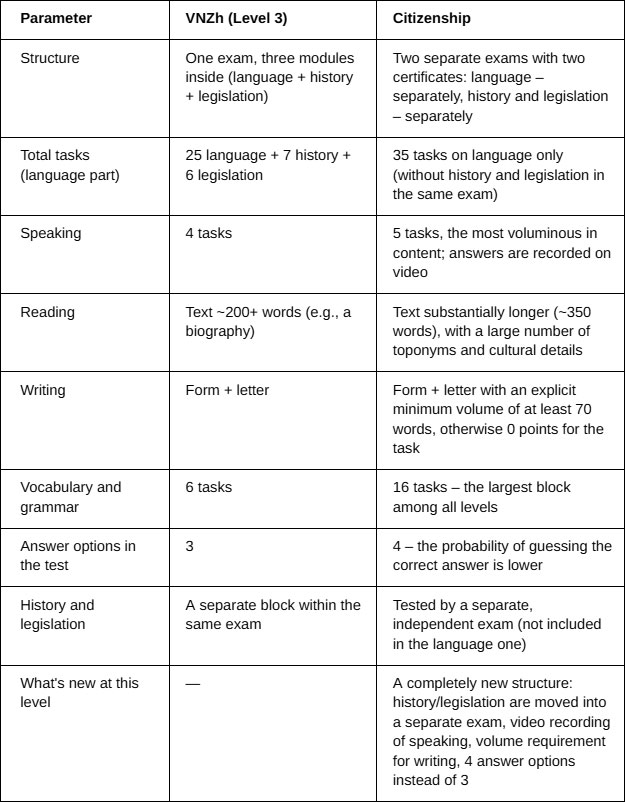
The citizenship exam is structured differently, and it's important to understand this upfront. So if someone who first obtained a patent, then RVP and VNZh, eventually gets to the question of how to obtain Russian citizenship, they won't be facing another rung on the same ladder — they'll be facing two separate exams.
For clarity, we have compiled three tables to make it easier to compare adjacent exams.
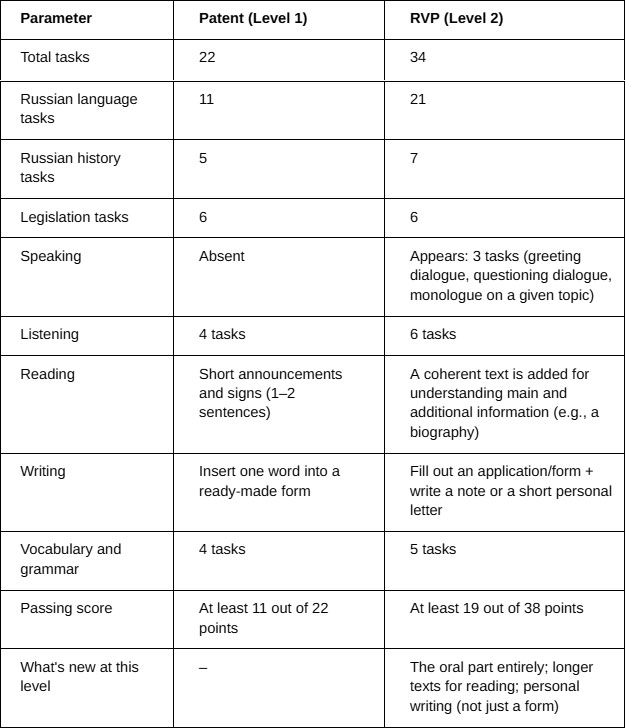
Patent vs RVP
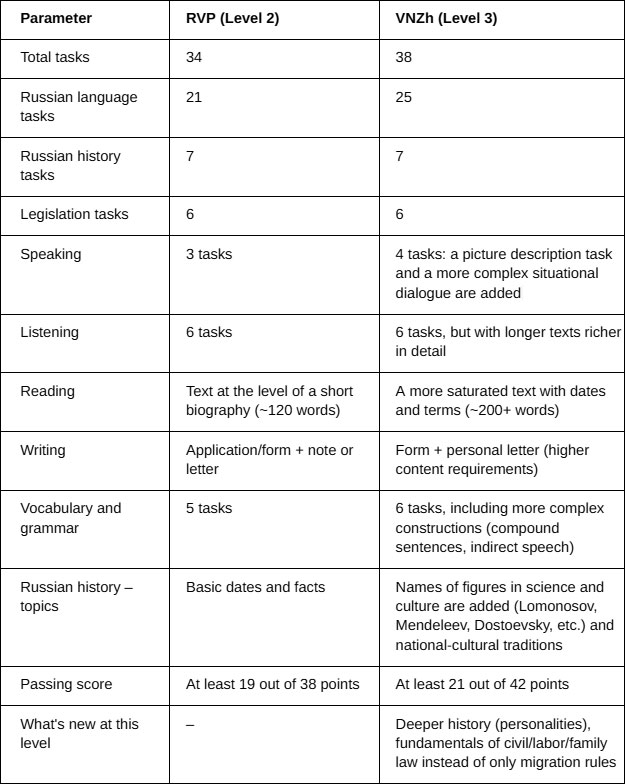
RVP vs VNZh
VNZh vs Citizenship
What if you prepared for the wrong exam — will you have to start over?
Migration statuses and certificate levels work from the top down. If you already have a higher-level certificate — for example, for VNZh — it can also be used for simpler purposes: RVP and a patent. You don't need to retake it.*
*This is set out in Federal Law No. 115-FZ, Article 15.
But it doesn't work the other way around. A certificate obtained for a patent does not qualify for RVP.
When it comes to citizenship, this rule applies less predictably: since citizenship is not a continuation of the same ladder but rather two separate exams, you shouldn't assume a VNZh certificate will automatically cover part of the citizenship requirements — this is a separate matter best checked on a case-by-case basis.
Tip💡: before preparing, it's important to determine not only your current status but also your goal for the next year or two. If it's clear that the path leads to VNZh, it's wiser to prepare for the VNZh-level exam right away. Then the certificate will cover both the patent and RVP along the way, and you won't have to take it multiple times.
How much time is needed for preparation
How long it takes depends on your starting level and whether the exam includes the history and law block.
Patent (A1): 1–2 months, 60–90 hours, written part only. The test covers only the most basic everyday topics, symbols and holidays, a minimum of dates, and a migrant's rights and obligations.
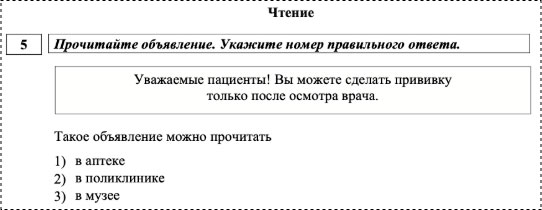
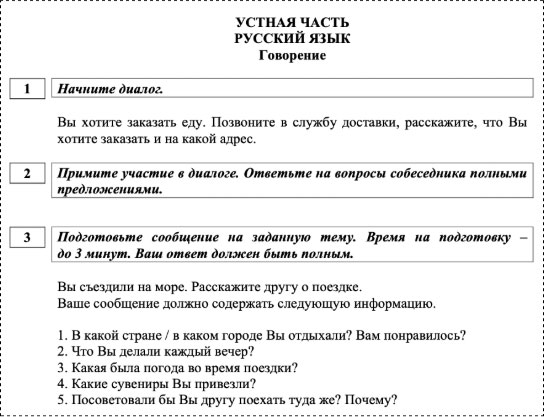
RVP (A2): 2–3 months, 100–150 hours, plus speaking. Speaking is added, along with the full historical chronology — from the calling of the Varangians to the Stalin era.
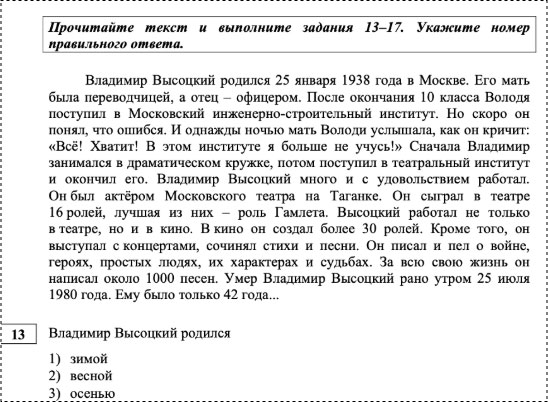
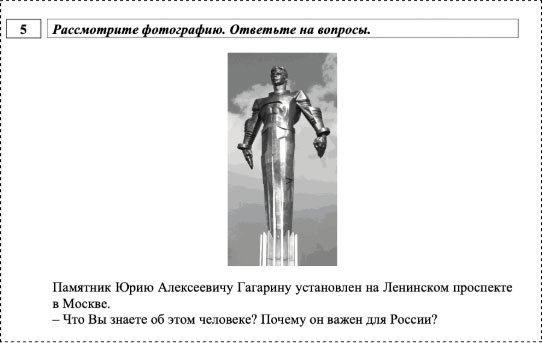
VNZh (B1): 3–4 months, 200–260 hours, of which 20–30 hours are for history and legislation. Key figures in science and culture and national and cultural traditions are added. The fundamentals of civil/labor/family law also come in.
Citizenship: a minimum of B1, preferably higher, but the history and law exam is taken separately, so both parts are prepared one after the other, over roughly the same 3–4 months.
Not sure about your level? Look at the level descriptions [link] or take the test [link].
Why study with us
Some of our teachers are current official testers of these exams, so they know the assessment criteria inside out. We train you for the exact format of your exam — not for a general language course. And it's not just about passing: most of our students end up speaking Russian confidently in everyday life, too.
What's next
Once you've figured out which migration exam you need, you can work out how much time to set aside for preparation. Next, check your current level and put together a plan. Sign up for a trial lesson: [link to trial lesson registration]. For help with your status application and paperwork, reach out to migration law specialists: