You learn Russian from a textbook. And then you open a chat with native speakers and see: "замогал" (zamogal), "кринж" (cringe), "нейрослоп" (AI slop). Textbooks can't keep up with such words. Dictionaries can't either. We saw it for ourselves on October 8 at the birthday of the "Zlatooust" publishing house: we turned 36!
How it was
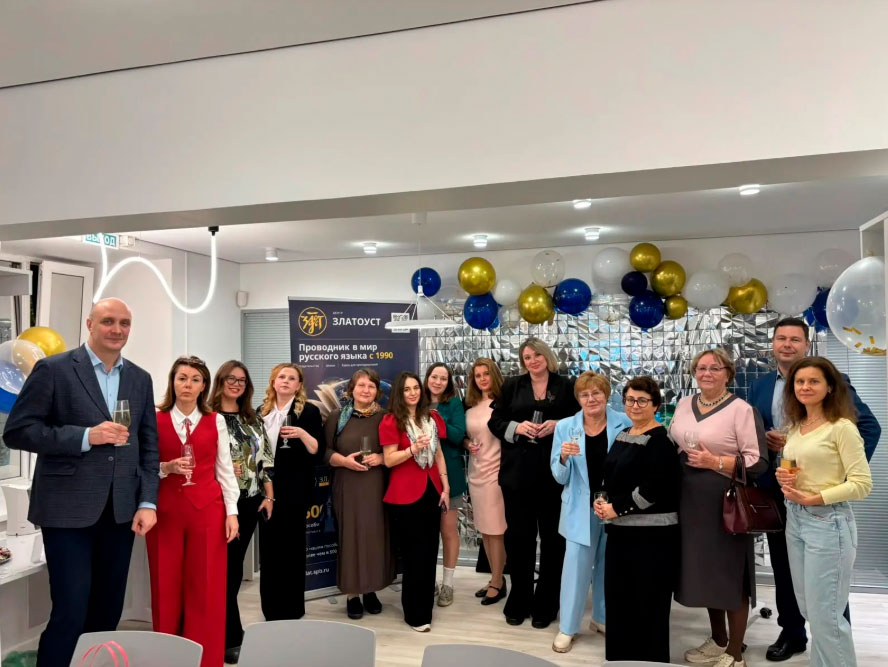
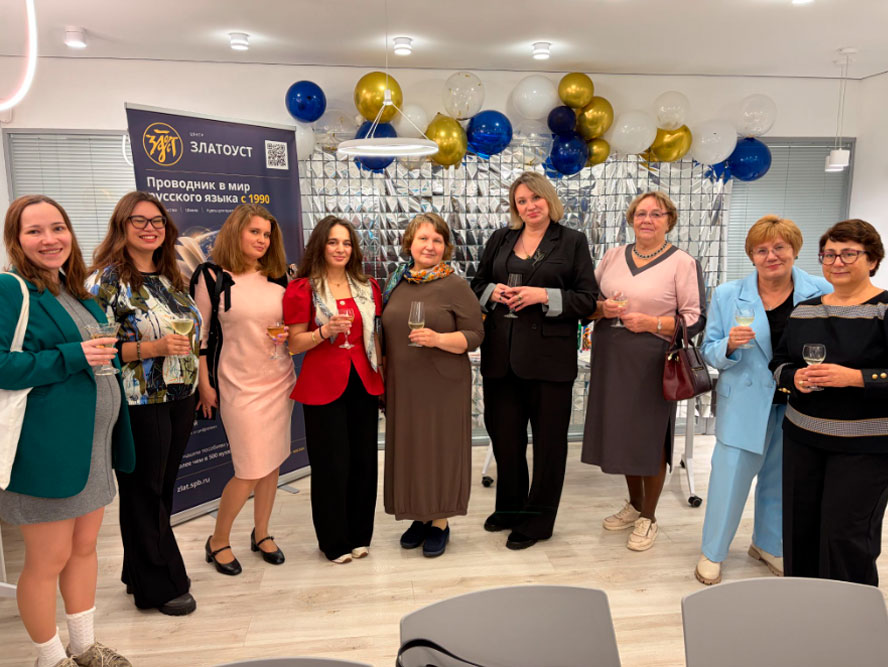
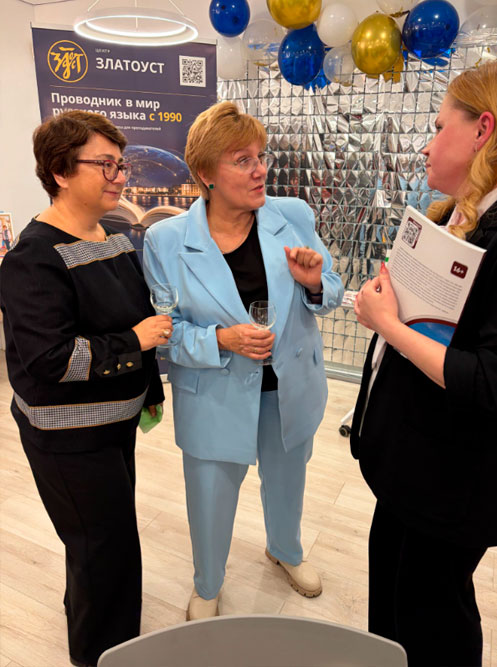
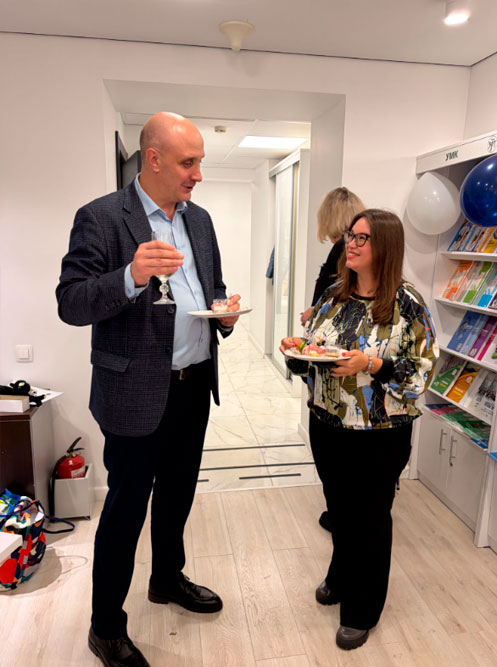
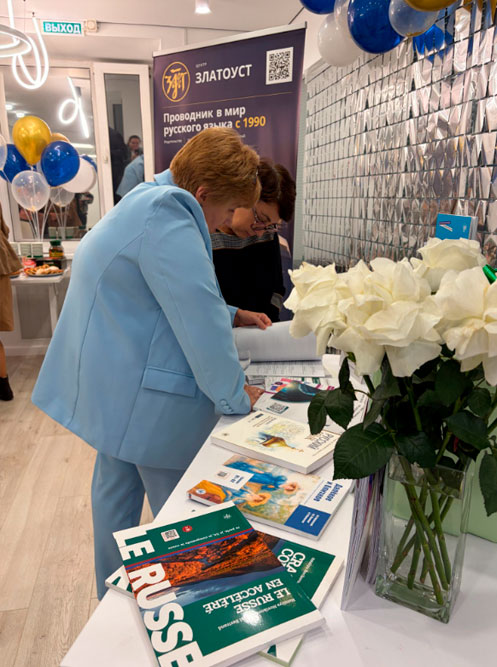
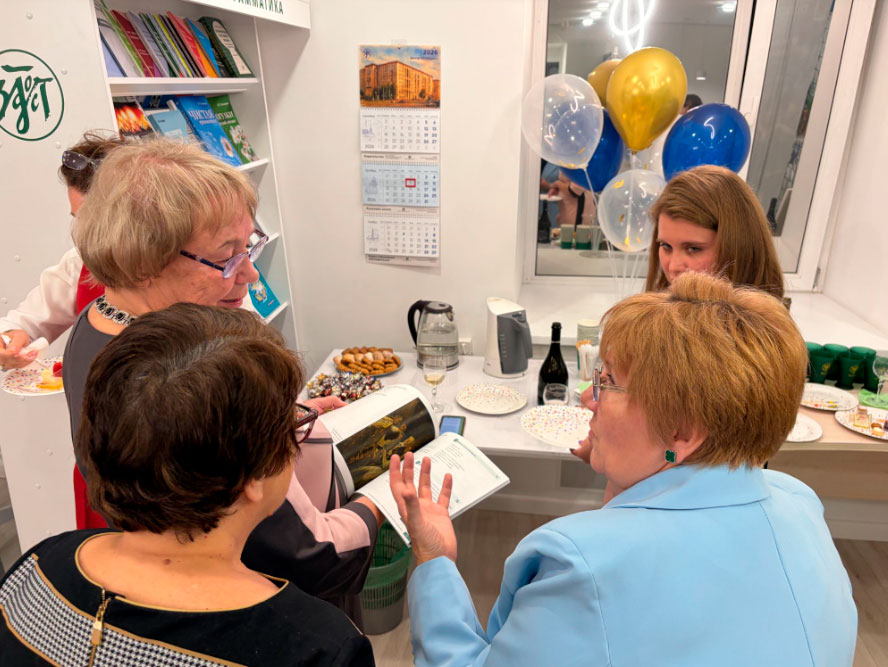
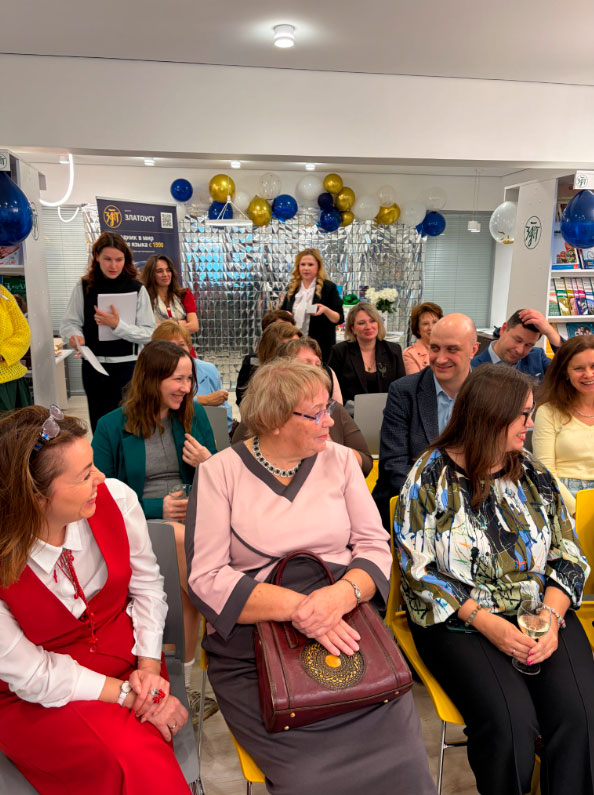
Authors of our textbooks, teachers, and colleagues from universities gathered at the Moscow office. Three and a half hours flew by unnoticed: congratulations, contests, prizes, and lively conversations. There was also the quiz "Do You Know Modern Russian?" and the "Dopamine Quiz," which were prepared as gifts for guests by Anastasia Alexandrovna Shitova, methodologist at "Zlatooust," and Vladimir Markovich Pakhomov, chairman of the Total Dictation.
The main takeaway of the evening wasn't the number of correct answers. Even native speakers and professional Russian language teachers sometimes hear a word for the first time. And that's normal.
Try It Yourself
Six questions from our quiz. Answers below—no peeking 😉
- "These are trees-…, we have many of them in the Baltics." Which word fits: попаданцы (popadantsy), поселенцы (poselentsy), or вселенцы (vselentsy)?
- What does "замогал" (zamogal) mean: got tired, turned out to be more successful, or was late?
- What is the habit of dumping overly personal stories on a new acquaintance on the very first evening called?
- Match the word and definition:
-
cringe, awkwardness, shame
- A. a personal assessment of one's own violation of social or moral norms;
- B. shame for another person's unnatural behavior;
- C. a mild feeling of discomfort due to an accidental mistake.
- Which region of Russia became attractive to tourists thanks to a Gen Z meme?
- Chekhov called one of his occupations his legal wife and the other his mistress. Which was which?
Answers
- Вселенцы (vselentsy): this is what trees and plants that came to a region from other places are called.
- Turned out to be more successful (from the English "to mog").
- Floodlighting.
- Cringe — B, awkwardness — C, shame — A.
- Smolenskaya Oblast (67 is the region code).
- Medicine was the legal wife, literature - the mistress.
Words of the Evening
- попаданец (popadanets) — a hero of a book or film who unexpectedly finds himself in another time or world. Books about popadantsy are very popular today.
- вайб (vibe) — the general feeling, atmosphere of a person, place, or event (vibe).
- нейрослоп (neuroslop) — low-quality content created by a neural network (AI slop).
- нишевый (nisheviy) — designed for a narrow circle of people with special interests (niche). Linguist Irina Levontina calls it the antonym of the word нормисный (normisniy) — this is said of someone who follows general norms and therefore seems boring.
- падел (padel) — a sport: two pairs of players play with short-handled rackets and a ball similar to a tennis ball (padel).
What the Teachers Talked About
The most interesting part began after the quiz. Teachers shared stories about their students: funny and warm ones.
They also talked about serious things: how to teach current generation, what difficulties teachers encounter in lessons and how to cope with them. They told how "Zlatooust" textbooks help with this.
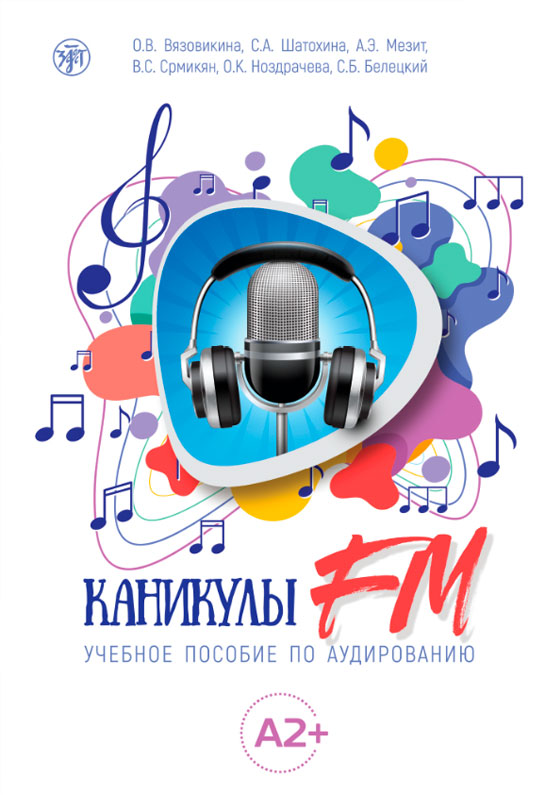
For example, among our publications there is the textbook "Каникулы FM" ("Vacation FM"). The textbook "Каникулы FM" on listening comprehension for level A2+ helps students develop all types of listening — from understanding the main content to critically evaluating information — using lively everyday dialogues from radio programs and podcasts (weather forecast, radio quiz, interview).
For the teacher, it provides a ready-made system of exercises with gradually increasing complexity that can be used as a supplement to the main course or as a standalone course. The audio supplement is available via QR code.
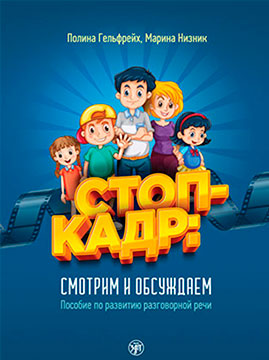
As another example of a wonderful textbook for learning Russian as a foreign language — "Стоп-кадр". It develops conversational speech for levels A2–B2 in Russian. It is built on video clips from the film journal "Ералаш" ("Yeralash") and helps students understand the living speech of native speakers, form oral and written speech, and prepare for TORFL.
Thanks to the vocabulary and grammar of the elementary and basic levels, it is suitable for both adult and teenage audiences, as well as for younger schoolchildren, including bilinguals. All videos are freely available, which makes the textbook convenient for the teacher as well.
It is important to remember that a living language cannot be learned by reading a textbook alone: live communication, video and audio, and situations of language use are needed. We became convinced ourselves on October 8: not knowing a word is normal. The main thing is not to be afraid to ask.
Learning Russian on your own?
Then this is for you. You can take a diagnostic test right now and sign up for a free trial lesson. This way you'll see your level and understand where and how to move forward.
See you next time!